Thursday, 27 April 2017

sunflower like raincoat 🌻

Sunflower 🌻 in my kitchen garden that's look like raincoat having seven colors

Sunflower seeds are a unique food, rich in many types of essential, and sometimes hard to get, nutrients. In fact, sunflower seeds make my Top 10 List for foods rich in Sunflower seeds are a unique food, rich in many types of essential, and sometimes hard to get, nutrients. In fact, sunflower seeds make my Top 10 List for foods rich in Vitamin E,copper, B Vitamins like thiamine, phosphorus, selenium, and more.
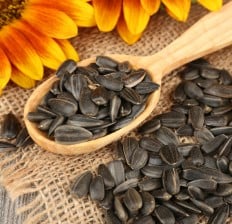
Sunflower seeds, like nearly all types of nuts and seeds, provide a healthy source of essential fatty acids; their specific fatty acids are in the form of linoleic acid. Additionally, sunflower seeds are also an excellent source of fiber, amino acids (especially tryptophan) which make up the building blocks of proteins, B Vitamins, phytosterols, and more.Sunflower closeup

Although as a culture we have been led to believe that consuming fat can lead to unwanted weight gain, the opposite is in fact true; consuming healthy fats actually leads to a healthy cardiovascular system, a stable healthy body weight, and reduced levels of body-wide inflammation.
Healthy sources of fats like those found in sunflower seeds are actually the building blocks for cell membranes, allow your body to balance hormones, help to slow down absorption of food during meal time so that we can go longer without feeling hungry, and also act as carriers for important fat- soluble vitamins A, D, E and K.
By adding healthy sources of fats into your diet, like the polyunsaturated kind that is found in sunflower seeds, and replacing trans-fats and low-quality easily oxidized fats, you can experience multiple health benefits.

Sunflower Seeds History 

Sunflower seeds come from, of course, sunflowers! The yellow flowers produce small edible seeds which are gray or greenly colored and are found naturally in dark green, gray, or black shells called “husks”.
According to the National Sunflower Association, Sunflowers are actually native to North America. There is evidence that sunflowers were cultivated by native Americans as long as 3000 B.C! However, they were first discovered and taken to Europe, and then spread to Russia where they were first commercialized as a crop and harvested for their oil. It wasn’t until the late 1800’s that they were brought back to North America where they are popular for their oil, seeds, and as a beautiful addition to your garden.
Sunflowers and seedsSunflower seeds are an excellent source of many vital nutrients including Vitamin E, also known as gamma-tocopherol. Vitamin E is a powerful antioxidant that is found in many nuts and seeds, but sunflower seeds are one of the best natural sources of this antioxidant, which works hard to fight free radical damage within the body.
Sunflower seeds are most highly correlated with boosting cardiovascular health thanks to their ability to reduce “bad” LDL cholesterol and to prevent hypertension, in addition to many other positive effects like cancer prevention, less headaches and muscle cramps, improved detoxification, healthy skin, and more.

 Sunflower Seeds Nutrition

A ¼ cup serving of sunflower seeds provides (in value recommended values): 190 calories, 16 grams of fat, 6 grams of protein, and 4 grams of fiber
  • 82% of Vitamin E
  •  70% DV of copper
  •  43% Vitamin B1 (thiamine)
  •  34% of manganese
  •  34% of selenium
  •  33% of phosphorus
  •  28% of magnesium
  •  28% of Vitamin B6
  •  20% of folate
  •  18% of Vitamin B3

2nd biocontrol Asia conference & exhibition


2nd biocontrol Asia conference & exhibition
Wednesday 7th June and Friday 9th june

Royal orchid shereton hotel and tower
Bangkok, Thailand 

Tuesday, 25 April 2017

how to sowing square watermelon part 3

  1.  how to sowing square watermelon part 3
     
    1.Choose a box to grow the watermelon in. Growing square watermelons is as easy as placing a young fruit into a square box. As the watermelon grows, it will grow into the box and grow in the shape of a cube. The mold must allow sunlight and air to pass through. To determine the size of the mold, check the seed package to find out the mature size of the fruit you're growing, and then pick a mold that’s a little smaller.
    • Make sure there's an opening in the lid for the stem, and that there's a lid that opens, closes, and latches.
    • Glass and acrylic boxes are ideal because they allow sunlight to pass through.
    • You can also use a wooden or metal box with lots of holes in it.
    • Alternatively, you can make your own mold from wood, metal, or another material.
    • If you're stuck for molds, you can also use a concrete or cinder block for the mold, but this will not yield a perfectly square watermelon.

  2. Pick a healthy watermelon from the vine. When the watermelon fruit is still young and about the size of a softball, choose a healthy specimen to grow into a square. Look for fruit with no bruises, blemishes, holes, or insect damage. You should also look for a round fruit, since this will likely grow more evenly. 

    3.Place the watermelon into the mold. Open the box or mold and place the healthy fruit inside. Leave the fruit on the stem so it will continue to grow. Close the lid partway. Slot the stem into the opening in the lid. Close the lid so the fruit is inside the box but still attached to the plant by the stem. Latch the lid so the growing fruit doesn’t burst out of the box.
    • Place the box on the ground with the lid and stem at the top.
      4.Continue caring for the watermelon as it grows. Make sure it gets plenty of sunlight throughout the day, and water the plant if there's a dry spell. Watermelons have a long growing season, and the weather will need to stay between 70 and 80 F (21 and 27 C) consistently for the fruit to grow and ripen properly.
    • As the watermelon grows, the fruit will get bigger, and will eventually take on the shape of the mold.
    5.Harvest the square watermelon when its ripe. The watermelons will all mature around the same time, so you can gauge if your square watermelon is ripe by the maturity of the other fruit on the vine. To harvest your square watermelon, unlatch the lid and gently pull the watermelon out of the box.
    • A watermelon is ready for harvest when the tendrils around the stem dry out, a light patch develops on the bottom of the fruit, and the fruit sounds dull and hollow when you tap on it


Sunday, 23 April 2017

square watermelon sowing part 2

Planting and Growing Watermelon

  1. Create hills in the soil. Hills or mounds tend to drain better than flat soil, which is ideal for watermelons. Using a rake or shovel, form the soil in the bed into hills that are 1 foot (30 cm) high and 3 feet (91 cm) in diameter. Space the hills 6.5 feet (2 m) apart.
     
  2.  
    Sow the seeds. Plant nine watermelon seeds in each hill. Plant the seeds in groups of three. Space the seed groups out evenly around the hill so the clusters are about a foot (30 cm) apart. To sow the seeds, simply press each seed ½ inch (1.3 cm) deep into the soil.

  3. Add a layer of mulch. Mulch is good for watermelons because it keeps the soil warm, retains moisture, and keeps weeds and pests out. Once the seeds have been planted, cover the hills with leaves, straw, or black plastic mulch,
    • If you live in a cooler climate, black plastic mulch will help keep the soil warmest as the watermelon seeds grow. 

  4. Water each week while the plants grow. While watermelon plants are in the initial growing stages, they need plenty of water. Make sure they get 1 to 2 inches (2.5 to 5 cm) per week as the seeds germinate, and as the plants grow, bloom, and fruit.
    • Once the fruit has formed, you can cut back on watering. Only water the plants during dry spells when there's no rain.

Saturday, 22 April 2017

Square watermelon sowing part 1

Part One of Three:
Getting the Garden Bed Ready

1
Select the right location. Watermelons need a few things to grow properly, including lots of space and plenty of sun. A good location to plant watermelon vines is an open area that gets lots of direct sunlight throughout the day.
Watermelon vines can reach 20 feet (6 m) in length.[1]
2
Prepare the soil. Watermelons are heavy feeders, so it’s important to amend the soil with lots of nutrients a few weeks before planting. They also need well draining soil. Add some aged compost, manure, or seaweed to the garden bed and till it into the soil. Use compost specifically if you want to ensure your soil drains well.
The ideal pH for watermelons is between 6 and 6.8.[2]
3
Warm the ground with black plastic. Watermelons seeds need warm soil to grow, and if you live in cooler or northern climates, you should warm the soil a couple weeks before planting to ensure it heats up enough. Cover the garden bed with black plastic, and lay some rocks along the perimeter to keep the plastic from blowing away.[3]
You can either use large sheets of black plastic from a gardening store, or you can cut open black garbage bags and use those.
4
Pick the right time to plant. The soil temperature must reach at least 70 F (21 C) before you can plant watermelon seeds. You should also wait until at least two weeks after the last frost, otherwise the seeds won’t sprout.[4]

Square ⬜ shape 🍉 watermelon

How to grow a square ⬜ shape 🍉 watermelon

Watermelons are a tasty summer fruit that you can grow at home in your backyard. In Japan, a tradition has started where people grow ornamental watermelons that are completely square, and you can do this as well with your own backyard watermelons. All you need are a few simple tools and some patience, and you'll have delicious square watermelons of your own in no time.

Wednesday, 19 April 2017

krishi karman award

krishi karman award


         The Union Ministry of Agriculture and Farmers Welfare has selected Tamil Nadu, Himachal Pradesh and Tripura for the Krishi Karman awards for their record performance in the production of food grains during 2015-16. Apart from these states, Meghalaya would get commendation prize for total food grain production and would be given a cash award of Rs 1 crore. Tamil Nadu has been chosen in large category (production more than 10 million tonnes), Himachal Pradesh in medium category (1 to 10 million tonnes) and Tripura in small category (less than 1 million tonnes). Tamil Nadu had produced 130 lakh tonnes of foodgrains in 2015-16, which is the highest in the last five years. In terms of yield in foodgrains, the state managed to get a yield of 3.38 tonnes per hectare as against the all-India average of 2.028 tonnes per hectare, which is 67% more than the national average. The state had adopted an “innovative, eco-friendly integrated pest management” to achieve this feat. In addition, government interventions like post-harvest management, disbursal of subsidies and integrated soil health management were also taken into account by the agricultural ministry. Tamil Nadu will receive a sum of Rs 5 crore for the award. Tamil Nadu had already bagged the award thrice in 2011-12 for highest food grains production, in 2013-14 for highest pulses production and in 2014-15 for highest coarse cereals production. Tripura has been selected for the Krishi Karman Award 2015-16 for a commendable increase in food grain production in small category states. The state produced 825,000 tonnes of food grain in 2016. The state would also receive a cash award of Rs five crore. Tripura gets this national award for the second time. The state targets to produce 935,000 tonnes of food grain in 2017
The Union Ministry of Agriculture and Farmers Welfare has selected Tamil Nadu, Himachal Pradesh and Tripura for the Krishi Karman awards for their record performance in the production of food grains during 2015-16. Apart from these states, Meghalaya would get commendation prize for total food grain production and would be given a cash award of Rs 1 crore. Tamil Nadu has been chosen in large category (production more than 10 million tonnes), Himachal Pradesh in medium category (1 to 10 million tonnes) and Tripura in small category (less than 1 million tonnes). Tamil Nadu had produced 130 lakh tonnes of foodgrains in 2015-16, which is the highest in the last five years. In terms of yield in foodgrains, the state managed to get a yield of 3.38 tonnes per hectare as against the all-India average of 2.028 tonnes per hectare, which is 67% more than the national average. The state had adopted an “innovative, eco-friendly integrated pest management” to achieve this feat. In addition, government interventions like post-harvest management, disbursal of subsidies and integrated soil health management were also taken into account by the agricultural ministry. Tamil Nadu will receive a sum of Rs 5 crore for the award. Tamil Nadu had already bagged the award thrice in 2011-12 for highest food grains production, in 2013-14 for highest pulses production and in 2014-15 for highest coarse cereals production. Tripura has been selected for the Krishi Karman Award 2015-16 for a commendable increase in food grain production in small category states. The state produced 825,000 tonnes of food grain in 2016. The state would also receive a cash award of Rs five crore. Tripura gets this national award for the second time. The state targets to produce 935,000 tonnes of food grain in 2017.

Read more at: http://currentaffairs.gktoday.in/month/current-affairs-2017-april
Current Affairs 2017 - April Current Affairs 2017 (April) with Latest Current Affairs for Banking, SSC, CLAT, UPSC, State PCS, IBPS and other Competitive Examinations. Current Affairs Today – April 2017 with news summary on current events of national and international importance. Enter Your Email Address To Subscribe Current Affairs Daily Digest, Daily Quiz and other updates on Current Affairs: Email Address Union Cabinet approves policy guidelines to allow state entities to directly borrow bilateral loans April 19, 2017No comments The Union Cabinet has approved the policy guidelines to permit financially sound State Government entities to borrow directly from bilateral ODA (Official development Assistance) partners for the purpose of implementing vital infrastructure projects. The approval is subject to fulfilment of certain conditions and all repayments of loans and interests to the funding agencies. As a corollary to the new decision, the Mumbai Metropolitan Region Development Authority (MMRDA) has been permitted to borrow directly from Japan International Cooperation Agency (JICA) Official Development Assistance (ODA) loan for implementation of Mumbai Trans Harbour Link (MTHL) project. Present guidelines At present, external assistance from bilateral and multilateral sources is received by the union government for: projects/programmes in the Central sector; projects executed by Central Public Sector Undertakings; on behalf of the State Governments for State sector projects/programmes implemented by the State Governments and/or local bodies and public sector undertakings. The existing guidelines prohibit State Government from borrowing directly from external agencies. In addition, the amount borrowed by the state governments would become a part of their FRBM (Fiscal Responsibility and Budget Management). Salient highlights of new guidelines The State government which gets the loan will furnish guarantee for the loan and the Government of India will provide counter guarantee for the loan. The state entities can directly approach bilateral agencies and the funding would not fall under state FRBM target. The eligibility criteria for state entities would be a revenue of over Rs 1,000 crore. In case of infrastructure projects, the cost criteria will be Rs 5,000 crore. Need Major infrastructure projects of several State entities have huge funding requirements, and borrowing of the State Governments for implementing such projects exhausts their respective borrowing limits. Therefore, it was considered necessary to facilitate direct borrowing by the State Government entities from bilateral external agencies. As per the new guidelines, State entities can directly borrow and repay the loan without burdening the State exchequer. Tags: External Assistance • FRBM • Infrastructure Investments • MMRDA • MTHL • National • States Tamil Nadu, Himachal Pradesh and Tripura chosen for Krishi Karman Awards, 2015-16 April 19, 2017No comments The Union Ministry of Agriculture and Farmers Welfare has selected Tamil Nadu, Himachal Pradesh and Tripura for the Krishi Karman awards for their record performance in the production of food grains during 2015-16. Apart from these states, Meghalaya would get commendation prize for total food grain production and would be given a cash award of Rs 1 crore. Tamil Nadu has been chosen in large category (production more than 10 million tonnes), Himachal Pradesh in medium category (1 to 10 million tonnes) and Tripura in small category (less than 1 million tonnes). Tamil Nadu had produced 130 lakh tonnes of foodgrains in 2015-16, which is the highest in the last five years. In terms of yield in foodgrains, the state managed to get a yield of 3.38 tonnes per hectare as against the all-India average of 2.028 tonnes per hectare, which is 67% more than the national average. The state had adopted an “innovative, eco-friendly integrated pest management” to achieve this feat. In addition, government interventions like post-harvest management, disbursal of subsidies and integrated soil health management were also taken into account by the agricultural ministry. Tamil Nadu will receive a sum of Rs 5 crore for the award. Tamil Nadu had already bagged the award thrice in 2011-12 for highest food grains production, in 2013-14 for highest pulses production and in 2014-15 for highest coarse cereals production. Tripura has been selected for the Krishi Karman Award 2015-16 for a commendable increase in food grain production in small category states. The state produced 825,000 tonnes of food grain in 2016. The state would also receive a cash award of Rs five crore. Tripura gets this national award for the second time. The state targets to produce 935,000 tonnes of food grain in 2017.

Read more at: http://currentaffairs.gktoday.in/month/current-affairs-2017-april